
Strengthen Due Diligence
Move from top-line claims to customer-level evidence. Audit historical performance, add predictive CLV, and underwrite risk and upside.
Let’s Talk
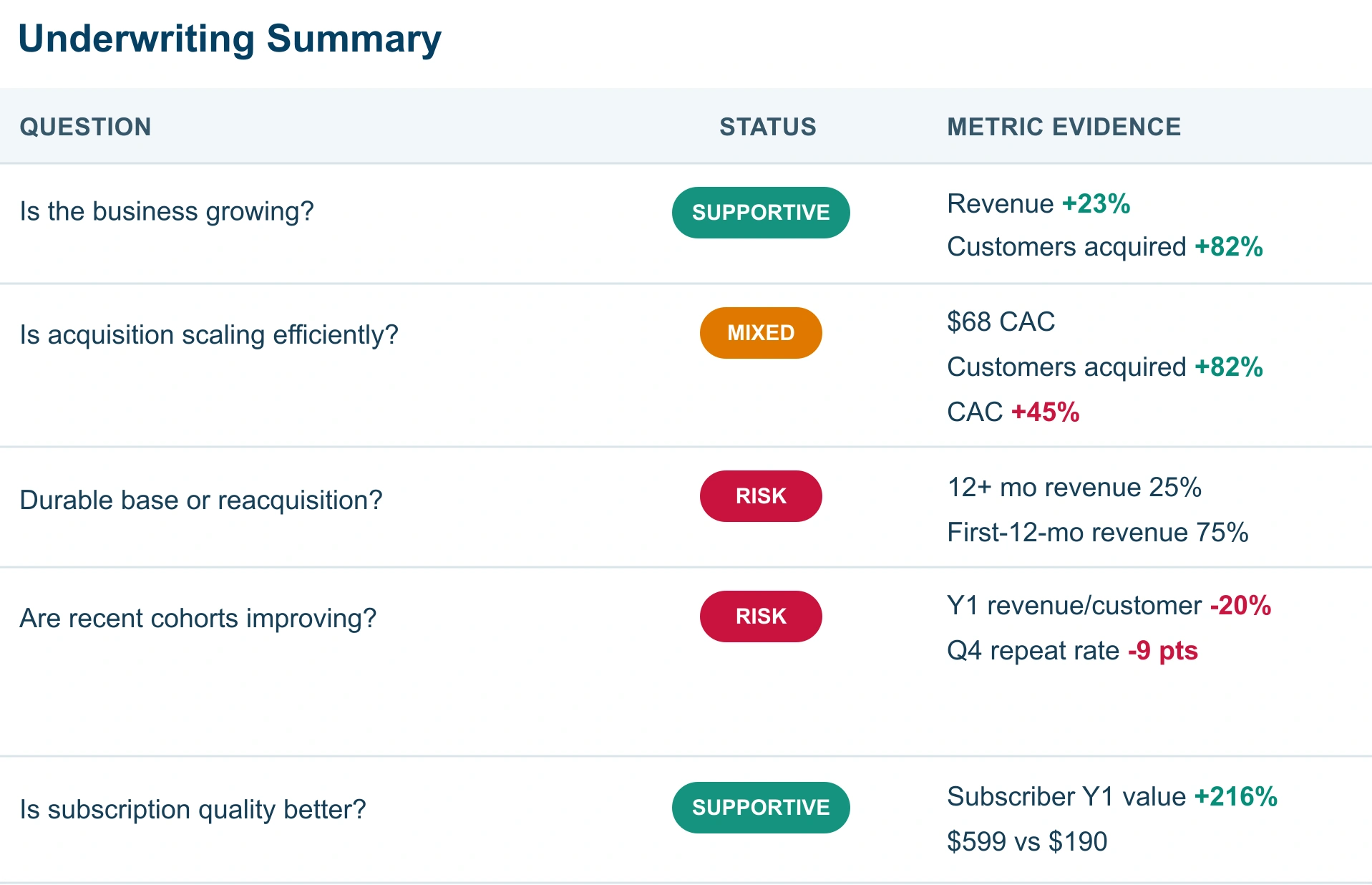
Customer-Based Due Diligence
See the customer engine behind the deal
Early diligence is constrained by time and imperfect information. A historical Customer-Base Audit quickly tests revenue durability, cohort stability, acquisition, and retention, surfacing revenue quality and risk for investors.
Where a forward-looking view is needed, add predictions for future customer behavior, CLV, and revenue. Together, both views help investors assess the investment thesis, key risks, and potential upside.
Prepare the data
Turn fragmented data into an analysis-ready foundation
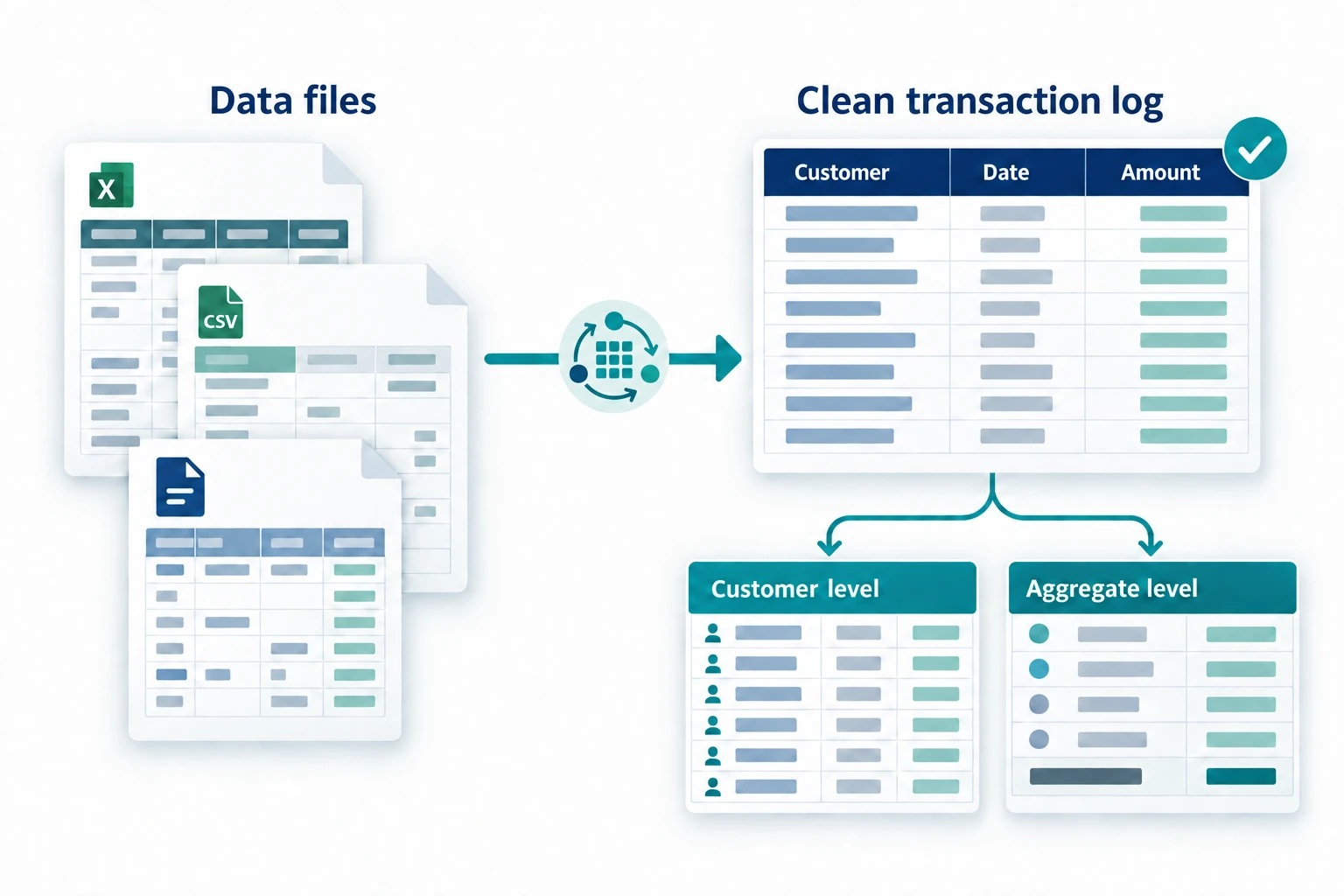
Theta rapidly cleans and standardizes company or data-room files into a canonical customer transaction log, supporting both Theta’s due diligence and your team’s own analysis and dashboards.
- Combine multiple files and formats into one consistent customer transaction history
- Standardize customer identifiers, dates, and transaction fields, and flag gaps or inconsistencies
- Receive a clean transaction log, customer-level summaries, and aggregate outputs for internal analysis
Start with the evidence
Get a fast read on customer-base quality
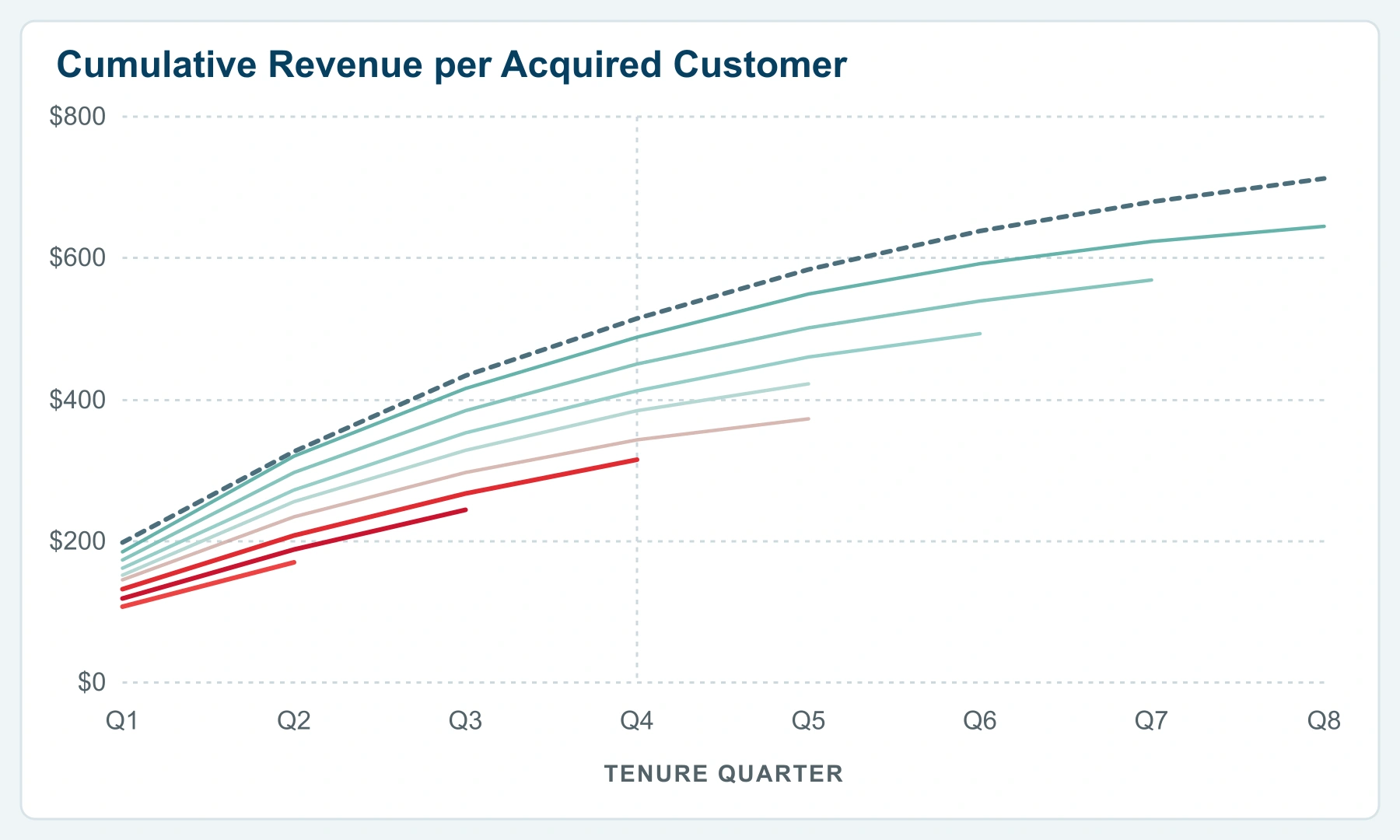
Use Theta’s historical Customer-Base Audit to establish an objective fact base early in diligence. Examine how revenue builds across cohorts and whether growth reflects durable repeat behavior or temporary mix, promotion, and acquisition effects.
- Determine whether growth is driven by stronger customer productivity or acquisition volume
- Test acquisition efficiency, mature-customer contribution, and repeat-purchase durability
- Expose cohort deterioration, mix effects, concentration, and other risks hidden in aggregate results
Look forward
Forecast retention, repeat behavior, spend, and revenue
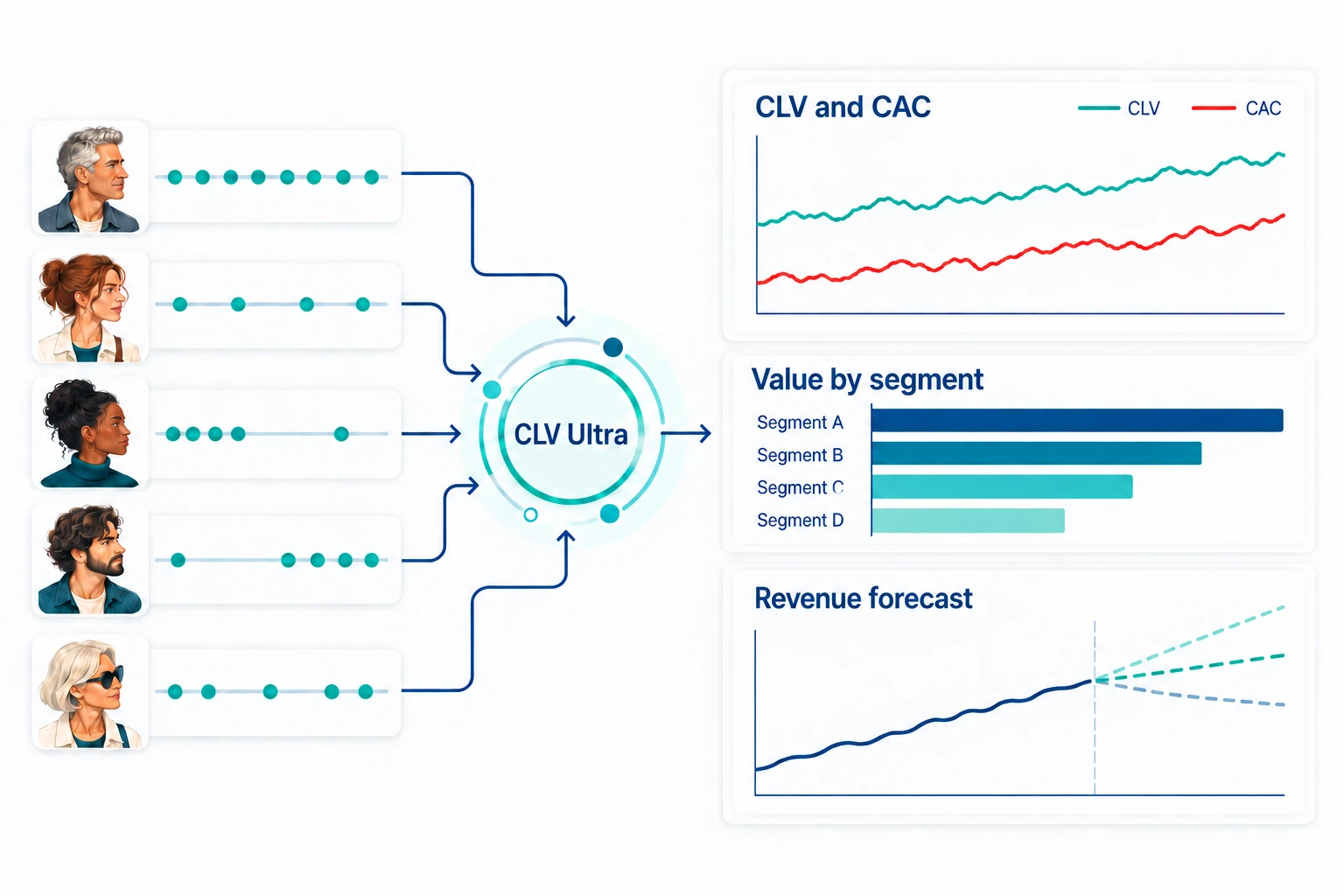
Move from the rearview mirror to predictions of who will remain active, buy again, and spend more. Combine Predictive CLV Insights with CLV:CAC and customer-driven revenue forecasts to test base, upside, and downside cases beyond historical trend lines.
- Estimate future retention, repeat purchasing, order frequency, and spend
- Compare customer value with acquisition cost across cohorts, channels, and segments
- Build a bottom-up revenue forecast and test management’s assumptions across scenarios
Value the business
Translate customer forecasts into corporate value
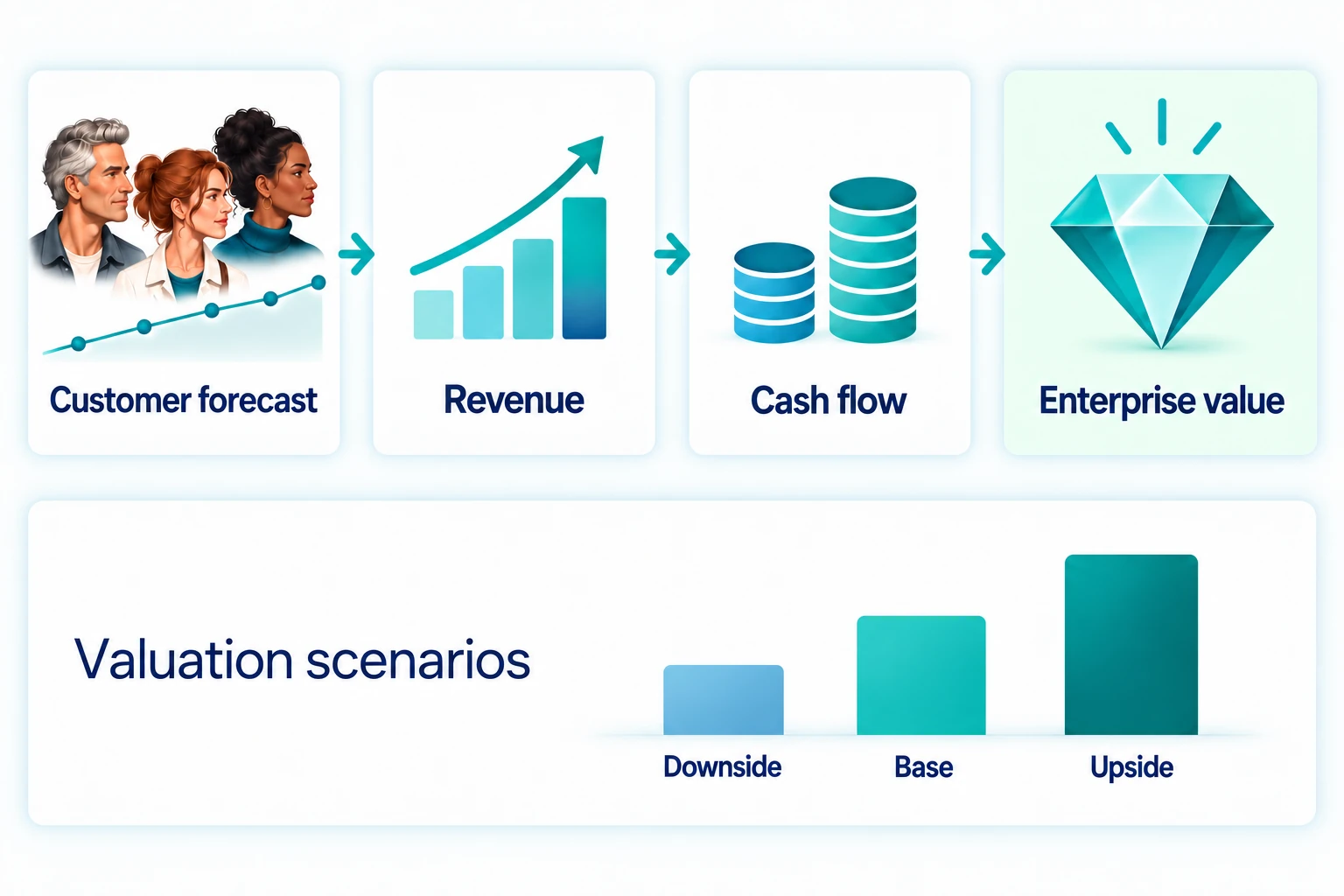
Connect forecasts of customer acquisition, retention, repeat purchasing, and spend to revenue, cash flow, and corporate value. Use Customer-Based Corporate Valuation to make the drivers, risks, and opportunities behind the valuation transparent.
- Build a customer-driven forecast of revenue, profit, cash flow, and company value
- Quantify sources of value and risk that traditional methods can miss
- Support a transparent, defensible valuation for the investment decision
What You Receive
A customer-based view of the investment
Use historical performance and forecasts to assess the investment. Scale the analysis to the time, data, and confidence the decision requires.
Historical Customer-Base Audit
A rapid review of revenue, cohorts, repeat behavior, acquisition, retention, and spend.
Predictive customer outlook
CLV, CLV:CAC, retention, repeat-purchase, spend, and revenue forecasts where deeper analysis is warranted.
Customer-Based Corporate Valuation
A customer-driven view of total future revenue, cash flows, corporate value, and the drivers behind the valuation.
Ready to Take the Next Step?
Ready for a stronger investment decision?
Talk with Theta about combining historical customer evidence, predictive CLV, and customer-based valuation to assess risk, upside, and the investment thesis.
Let’s Talk